We use cookies to make your experience better. To comply with the new e-Privacy directive, we need to ask for your consent to set the cookies. Learn more.


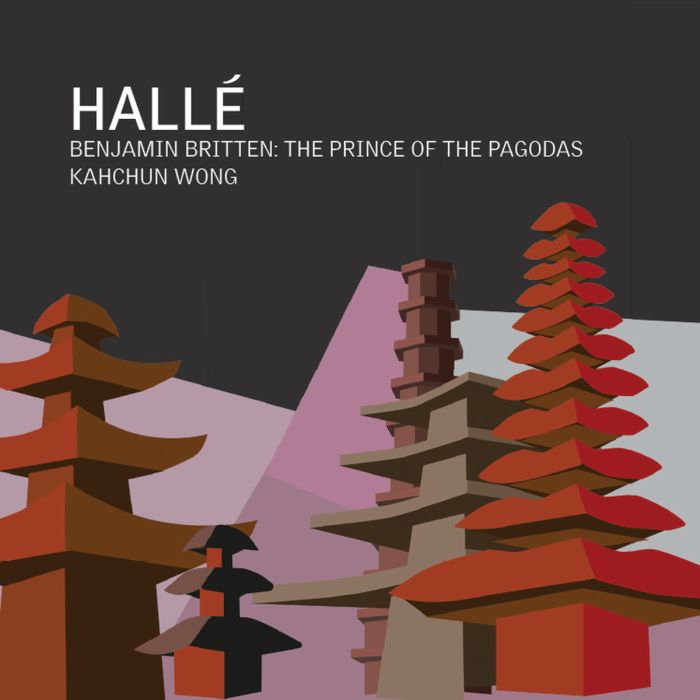
Benjamin Britten: The Prince of the Pagodas (Ballet in three acts Op. 57)
£19.99
In stock
Catalogue Number
CDHLD7565
Internationally acclaimed for his dynamic stage presence and his thoughtful exploration of Eastern and Western artistic legacies, Singaporean-born Kahchun Wong assumes his new role with the Hallé in September 2024, following his electrifying debut with the orchestra last season. This recording of the complete The Prince of the Pagodas ballet, the first in over a decade, reflects Wong’s interest in Balinese Gamelan and the deep connection he made during his composition studies to the work of Britten. Music which he says, ‘resonates deeply inside me’. Wong’s interpretation reflects his interest in diverse folk traditions and is further enhanced through musicological detail, as a result of time spent at the Britten Pears library with Britten specialist, Composer Emeritus of the Hallé, Colin Matthews. This collaboration resulted in a new Prince of the Pagodas Suite, with selections made by Wong and Matthews. This will be premiered in Wong’s inaugural concert as Principal Conductor, in The Bridgewater Hall, Manchester on 26th September 2024. The ballet’s fantastical story – of jealousy, magic and love – is colourfully depicted in Britten’s masterly score which is presented in this recording by the Hallé musicians at the very top of their game. The release is accompanied by an authoritative programme note by Britten scholar Philip Reed.
Manufacturer: Wyastone Estate Limited, Wyastone Leys, Monmouth, NP25 3SR
Email: sales@wyastone.co.uk
Reviews:
“I count myself as a Britten aficionado, one of those 3-5 composers I reach for whenever I am listening for pure pleasure. However, despite that I think this is the first time I have heard this complete ballet, for decades at the very least… Therefore, this release, while not the first of the complete ballet, is the first for some time, and given the prominence of the Balinese Gamelan instruments, it is perhaps especially fitting for the performance to be conducted by the new Singaporean Hallé Principal Conductor who in his booklet note discusses how he first encountered Britten's score as part of his compositional studies, partly because of the inclusion of these instruments… like many ballets, it's a series of often short episodic pieces, brilliantly orchestrated, and deserves much more attention than it typically gets. It is given an excellent interpretation, performance and recording here that brings out the full humor and demonstrates the scintillating musical ear of this composer. It is worth hearing just for sheer enjoyment, even if it would not be the first musical choice in this composer's oeuvre I would have in time of emotional need and succor.” Ian Orbell, Classical Music Sentinel [read complete review]
"Britten’s ballet The Prince of the Pagodas conducted by Kahchun Wong
After twenty-five years, Sir Mark Elder relinquished his post at the head of the Hallé Orchestra (England’s oldest) this summer and handed over to the Singaporean conductor Kahchun Wong. Given his background, it is perhaps not surprising that he chose Benjamin Britten’s oriental ballet, The Prince of the Pagodas, as his first recording in the role. It is a long work, over two hours, and Britten did not enjoy writing it. The choreographer John Cranko gave him a fairy tale scenario and only became involved again when the ballet was in production. Its first performance on New Year’s Day 1957 at Covent Garden was a moderate success, and it has never quite found a firm place in the repertoire. As a musical experience, it still feels disjointed, but it is easy to see why Wong is intrigued. Britten’s orchestral textures and colours are ingenious, and his ability to provide Cranko with dramatic but fluid dance cues is imaginative. The importance of this recording, though, is in the signal it sends that the 38-year-old Wong’s regime with the Hallé is likely to offer Manchester a different character from Elder’s. It will be interesting to watch it develop. The orchestra plays beautifully, but Elder’s meticulous training this century has made it one of the best in Europe." Simon Mundy, EyeOnLondon
"From sweet Disney tunes to nods to the interwar period: Britten's kaleidoscope of short dances balances between fairytale charm and adventurous edge. The Halle Orchestra delivers a warm, full sound that also takes its toll: the rhythmic punch of Britten's writing sometimes gives way to orchestral opulence. How beautiful: how the modernist dissonances grind unhindered, like grains of sand that sharpen the wheels of the orchestral machine, without disrupting them." De Standaard
"Kahchun Wong’s new version, sumptuously played and recorded over six days, is more expansive than Knussen’s, placing the score firmly in the romantic ballet tradition. You can sense the players grinning with delight at some of Britten’s effects: if you’re new to Pagodas, start here." Graham Rickson, theartsdesk
"… The Hallé have the benefit of a three-decade advance in recording technology. That would not matter if the new version had not been produced with care, but it is good, very good in fact. The orchestra is caught with clarity and brilliance to a stunning effect…
This is the recording debut of Kahchun Wong, The Hallé’s new Principal Conductor. He contributes an appreciative essay on the music. is a brief synopsis with the 24 tracks named on each disc." Jim Westhead, MusicWeb International
"The Prince of the Pagodas may not have been an entirely congenial experience for Britten but he still composed a score that is full of colour, imagination and invention. The gamelan effects at the end of Act II may be the most ear-catching aspect of the score but even leaving that aside the ballet is still wonderfully imagined for the orchestra. The Hallé performs the music with verve and flair. It’s evident from a note that he has contributed to the booklet that Kahchun Wong admires the score greatly and is excited by it. That, I think, comes across in this recording. I also have the impression that the players relished this new challenge – the percussion section has a field day as the Manchester gamelan! I found myself intrigued by the work and fascinated by Britten’s invention. And for those who aren’t always drawn to Britten’s music, I can say that this score represents him at his most accessible and enjoyable. In addition to the gamelan section there are many other examples of highly inventive writing. For instance, I think that the way Britten portrays the three elements, Air, Water and Fire in Act II shows him as an inspired user of instruments for illustrative effect… Philip Reed’s essay about the ballet in the Hallé booklet is very good indeed.
I may have some reservations about the score itself, but I have none about this new performance. These CDs launch the partnership between the Hallé and Kahchun Wong most impressively. I look forward to experiencing their work together on future releases." John Quinn, MusicWeb International
"Is that different now, with Wong? On one important point, however: the recording is considerably better than Virgin's. The stunningly good orchestral playing has been masterfully recorded by the technicians and immediately makes it clear that this fairytale ballet score has considerably more finesse than the Virgin recording shows. Even without the score, it is impossible to escape the conclusion that Wong and the orchestra have provided a great, detailed interpretation of this ravishing score." Aart van der Wal, Opus Klassiek
"We should salute the choice of Kahchun Wong who offers the complete score of this too rare score on record. In an introductory note, the conductor points out that during his studies in Singapore, he too was attracted to Balinese gamelan and that he feels close to Britten's music. He begins his tenure at the Hallé Orchestra with an adventure full of magic. It underlines Britten's imagination with panache and a palette of assertive colours, even if it does not quite manage to rise to the level of the only other complete works, that of Oliver Knussen, which is generally more nervous and incisive, and which remains the reference for this seductive ballet." Jean Lacroix, Crescendo Magazine
"Kahchun Wong himself shows himself to be an empathetic, meticulous and at the same time courageous designer. He captures the rich symbolism of the score and gives it both the mystical atmosphere and the dramatic peaks inherent in Britten's music. He lets the quiet, almost meditative passages flow organically and allows the instruments to savor their tonal details. He implements the dynamic changes and the often unexpected rhythmic breaks of Britten's composition with energetic clarity and precision. In doing so, he challenges the orchestra to top performances, which is reflected in the balance and cohesion of the musicians – under his direction, the Hallé Orchestra not only sounds homogeneous here, but at the same time unfolds a dazzling tonal diversity that brings every part of the composition to life.
The way in which Wong emphasizes the structure of the work in individual climaxes and in the dramaturgical design shows his profound preoccupation with the score.
With this impressive recording, Wong and the Hallé Orchestra have created an exemplary interpretation of Britten's "Prince of the Pagodas". Wong combines analytical acuity with interpretative empathy and reveals the Hallé Orchestra as an ensemble that is not only technically brilliant, but also tonally sophisticated and narratively convincing. This recording leaves a lasting impression and arouses anticipation for further joint projects." Dirk Schauß, Online Merker
"Kahchun Wong’s new version, sumptuously played and recorded over six days, is more expansive than Knussen’s, placing the score firmly in the romantic ballet tradition. You can sense the players grinning with delight at some of Britten’s effects: if you’re new to Pagodas, start here." the arts desk
"This recording shows an impressive range and expressiveness that highlights Britten's "Prince of the Pagodas" in all its facets. The precise use, the clarity of the vocal leading and the mutual permeability between the individual instrument groups create an overall picture that goes far beyond the purely technical and deep emotions." Michel Dutrieue, Stretto Magazine
"It’s impossible to draw a judgment from one release, but Wong rises to the occasion in a reading of The Prince of the Pagodas that vies with his two illustrious predecessors. The recorded sound, as usual with this orchestra, is first-rate in its vividness and presence. The score is technically demanding; this aspect comes through very well in the Hallé’s vibrant playing. As a full-length ballet, the piece benefits enormously from visuals (there’s a complete performance of the MacMillan version with the Royal Ballet on YouTube, if you can tolerate the blurriness of the televised images). Consigned to Britten’s score alone, you can’t miss with any of the recordings I’ve mentioned, including this splendid new one." Huntley Dent, Fanfare Archive
"In sum, The Prince of the Pagodas is an enchanting score, well played here and recorded in up-to-date sound, with a highly sympathetic conductor and an orchestra fully versed in English music. Britten may have dismissed the work in later life—the full score was never published during his lifetime—but each time it has resurfaced over the decades it has made a strong impression. It does so again here." Phillip Scott, Fanfare Archive
"Benjamin Britten’s 1956 ballet The Prince of the Pagodas, an old-school type of work with kings and princesses and an exotic setting, will be unknown to many listeners. It was recorded in 1990 under the baton of Oliver Knussen once in a truncated form by Britten himself, although aside from those two, it is absent from recording catalogs. It’s quite a find, and this was probably what put this fine performance by the Hallé Orchestra and new conductor Kahchun Wong on classical best-seller charts in the late autumn of 2024. Wong identifies the work’s most salient feature: its rather uncannily accurate representation of Balinese gamelan music (accomplished entirely with instruments of Western orchestras), in his notes as he talks about his study of this Indonesian tradition in his native Singapore. Sample “The pagodas revolve like merry-go-rounds.” But what’s interesting is that he added the Balinese element midway through his work on the ballet, after traveling to Bali and making a close study of the music, noting correctly that it was “as complicated as Schoenberg.” That might sound slapdash, but it doesn’t come off that way; the Balinese element is merely one in a series of surprises that unfolds over the course of this colorful and high-spirited work. Listen to the parodically serialist “Variation of the King of the West” from the first act. An imaginative choreographer would have no trouble staging this ballet, whose setting is an unspecified Eastern one, not specifically Balinese; the tale is a fascinating mixture of East and West, and is undoubtedly a neglected find among Britten’s later works." James Manheim, AllMusic.com