We use cookies to make your experience better. To comply with the new e-Privacy directive, we need to ask for your consent to set the cookies. Learn more.



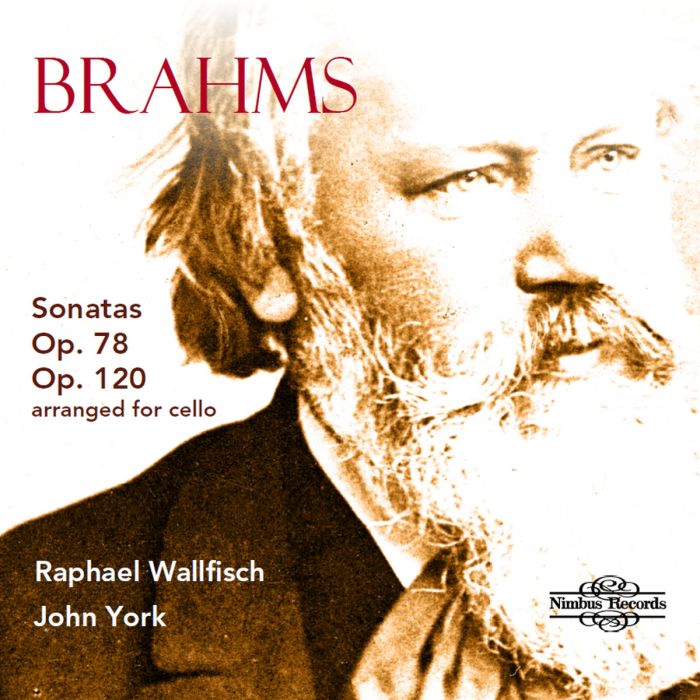
Brahms: Cello Sonatas Vol. 2 (Op. 78 & Op. 120 arranged for cello)
£14.99
In stock
Catalogue Number
NI5974

Cellists are fortunate indeed to have their two Brahms sonatas, both masterpieces in their genre. So one can, and certainly will, ask why we need or indeed dare to ‘borrow’ the G major violin sonata and the two clarinet sonatas and thereby make our two into five. Questions that arise: Are we just attempting to reproduce the original work with the necessary pitch and register changes? Can this be an opportunity to give another significance, even a second parallel existence, to a beloved work of art? The answer to the first question must be ‘no’, because such a treatment would simply be arrogant and pointless. To the second, I hope, listeners can agree that the two clarinet sonatas and the G major violin sonata lose nothing in these ‘translations’ and even gain a great deal of new and perhaps unexpected depth and character.
Manufacturer: Wyastone Estate Limited, Wyastone Leys, Monmouth, NP25 3SR
Email: sales@wyastone.co.uk
Reviews:
"…Wallfisch's and York's experience of playing together for so long certainly pays dividends. After the mellifluous and certainly amiable Allegro Amabile, the Allegro appassionato has a brimming and pent-up emotion that is so often present in Brahms. It's a warm-hearted, affectionate and unhurried work, the epitome of an Indian summer which Brahms, like 'Old Jolyon' in the contemporary "Forsyte Saga" was enjoying; he greatly liked the Hamburg composer. This transcription clearly works.
At the live concert, the Adagio had a darkness and tortured anguish, with the piano's statement of the theme resonating with bell-like sonority. This is very apparent in the recording. The individual voices of the chordal progressions remained lucid and the cello extends the tragic air. Again, Wallfisch's double-stopped melodies are gloriously rich and sonorous. Whilst it is clearly different to a violin, his vibrato in the concluding phrases is even more telling. The instrument and transposition of key makes it an altogether darker work. The duo's playing, especially here, is magnificent, moody and moving, which brought to mind Brahms' mentor Robert Schumann, also a very successful composer for the cello, rather more than the violin… The timbres that Wallfisch produces from the cello really have to be heard and the ending, with the beginning returning briefly, is magical.
The disc concludes with the first Clarinet Sonata in F minor which, as York points out, is the more passionate of the two, especially in the surging first movement. The aptly named Allegro molto moderato first movement has some similarity to the musical argument of Brahms' Second Symphony. Heartstrings are pulled effectively in the plaintive Andante un poco adagio and the two instruments are in perfect unison. There's a charming melody and more spirit in the Allegretto grazioso before the work ends with a spirited and forceful Vivace which sounds perfectly natural…
This recital seems to be a very successful collection of transcriptions, due to the dedication and skilful prowess of Raphael Wallfisch and John York. The great thing about adaptation of music, unlike say, a building, is that the original is still present and can be enjoyed as a different experience…
I commend this recording to lovers of Brahms' cello and of these two first-class musicians. I would love to hear Volume 1 and the set of Trios and Double Concerto; all wonderful works by a master composer." Music Web International
"Seriously underrated pianist John York makes excellent observations on how he and Raphael Wallfisch worked on these transcriptions… It was such a delight, too, having been previously listening to some recording where cello and piano sound is problematic, to find the engineering here allowing ideal engagement with both instruments…" BBC Music Magazine

|
| Sample Tracks |
|---|
|
NI5974 Sonata in E flat Major, Op. 120 No. 2: III. Andante con moto - Allegro
NI5974 Sonata in G Major, Op. 78: II. Adagio
NI5974 Sonata in F Minor, Op. 120, No. 1: I. Allegro appassionato
|
0.135 kg