We use cookies to make your experience better. To comply with the new e-Privacy directive, we need to ask for your consent to set the cookies. Learn more.



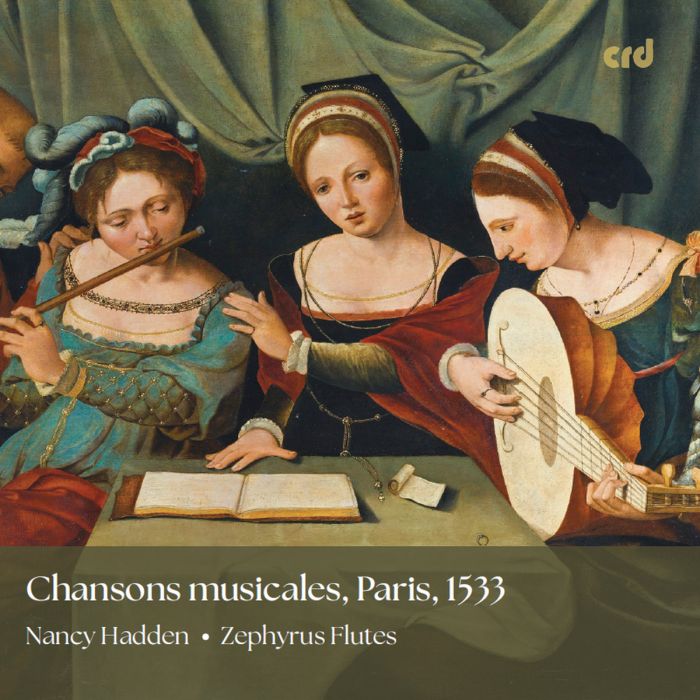
Chansons musicales, Paris, 1533
£14.99
In stock
Catalogue Number
CRD3548
Through the songs or ‘chansons’, we are given the chance to be transported back to a point when the word, note, instrument and performer collided to document impressions of a world lived long ago and yet with which we share so much. As songs that had a vibrant life beyond the words, we are afforded an entrance into the evergreen world of instrumental music of the Renaissance, into music that filled the taverns and dwellings of Paris and beyond.
This is why these works maintain such relevance for us today. For Chansons musicales is not simply an exercise in museum-driven reconstruction, notwithstanding the world-class research that underpins the project. These are living and breathing works. Together, the 1533 publications from which the tracks on this album are drawn (and reconstructed) offer a rare window onto the extant oeuvre of composers of times gone who took their cue from contemporary poetry. This was poetry that captured the natural and human world around them and could be adopted to create chansons of different styles whose themes – love, hope, regret, the seasons, and more – artists of all creeds continue to explore for our benefit as we look to understand our world and our place in it. Hence the timelessness of works disseminated nearly 500 years ago and hence these recordings.
Manufacturer: Wyastone Estate Limited, Wyastone Leys, Monmouth, NP25 3SR
Email: sales@wyastone.co.uk
Reviews:
‘The Zephyrus Flutes players… ably replicate, through clear phrasing, careful control, gentle inflections and touches of vibrato, the sounds and sensibilities of the poetry to which the music was originally set. Lutenist Jacob Heringman accompanies the flutes (three tenors in D and a bass in G) on several tracks, adding depth and variation of timbre… The recorded sound from St Andrew’s Church in Toddington, Gloucestershire is close up and warm, complementing the resonance of the instruments themselves.’ John-Pierre Joyce, BBC Music Magazine