We use cookies to make your experience better. To comply with the new e-Privacy directive, we need to ask for your consent to set the cookies. Learn more.


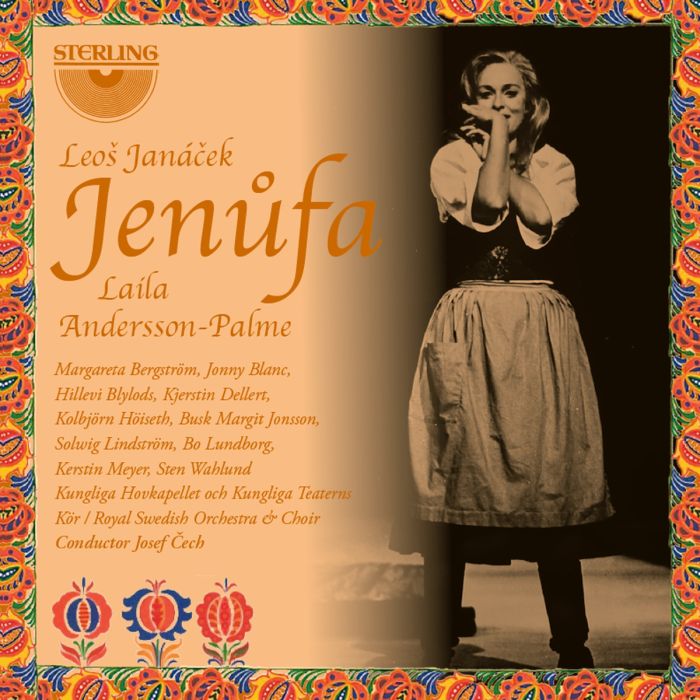
Leoš Janáček: Jenůfa - Opera in three Acts
£19.99
In stock
Catalogue Number
CDA1879
Její pastorkyňa (Her Stepdaughter; commonly known as Jenůfa) is an opera in three acts by Leoš Janáček to a Czech libretto by the composer, based on the play Její pastorkyňa by Gabriela Preissová. It was first performed at the National Theatre, Brno on 21 January 1904. Composed between 1896 and 1902, it is among the first operas written in prose. The first of Janáček's operas in which his distinctive voice can clearly be heard, it is a grim story of infanticide and redemption. Like the playwright's original work, it is known for its unsentimental realism.
Manufacturer: Wyastone Estate Limited, Wyastone Leys, Monmouth, NP25 3SR
Email: sales@wyastone.co.uk
Reviews:
"The cast stands out for a markedly theatrical approach. Laila Andersson-Palme, in the role of Jenůfa, builds a vulnerable but firm character, with a clear and expressive vocal line that credibly conveys the psychological evolution of the character. Kerstin Meyer, as Kostelnička, gives a particularly striking performance, with a vocal and dramatic authority that makes the character's cruelty plausible without renouncing its tragic dimension. Among the male characters, Jonny Blanc, in the role of Števa, offers a convincing portrait of the irresponsible seducer. The voice, with a clear and luminous timbre, suits the superficial character of the character and knows how to convey both the initial braggadocio and his progressive flight from responsibilities.
The female voices of the choir, in particular, contribute decisively to creating a compact choral atmosphere, essential in a work in which the weight of the collective is as decisive as that of the protagonists.
The orchestra, precise and contained, serves the drama with a harsh but transparent sonority, fully suited to Janáček's aesthetic. It is worth highlighting the ability of the group to integrate choir, soloists and orchestra within the same dramatic vision. The choir of the Swedish Royal Opera is not treated as a decorative element, but as an extension of the oppressive community that surrounds the protagonist." Marçal Bototau, Sonogram Magazine
"…There’s no question of the astonishing range and versatility of the soprano Laila Andersson-Palme during the course of her career. From the Queen of the Night to Elektra is the title of another Sterling release (CDA1806) which gives a good sense of this… Sterling has provided interesting documentation. Sadly there are no texts or translations, but we do get an interview with Andersson-Palme and many pictures from the apparently traditional production Götz Friedrich staged. The recording is dedicated to his memory, a nice touch.” © 2026 Fanfare

|
| Sample Tracks |
|---|
|
Jenůfa, Act 1: IV. Och du, Jenůfa, följer du ej med till mor? (Live)
Jenůfa, Act 2: VII. Mor lilla! Jag är tung I huv'et… (Live)
Jenůfa, Act 2: IX. Vem är där? (Live)
Jenůfa, Act 3: VI. Den stackar'n! Någon har mördat'en! (Live)
|
0.635 kg