We use cookies to make your experience better. To comply with the new e-Privacy directive, we need to ask for your consent to set the cookies. Learn more.



Malcolm Lipkin Piano Music
£14.99
In stock
Catalogue Number
SRCD414
- available to download and stream from all Digital Platforms
Malcolm Lipkin's experience and skill as an executant who can perform his own music is evident in each of his piano scores. This is intrinsically piano music, devised specifically for hands at a keyboard. Often hypnotic and brooding, it beckons the listener in to an ethereal, uncanny soundscape. At other times, the material is brilliant and challenging, demanding from the player a formidable technique. Perhaps the most notable aspect of Lipkin’s writing for piano is its basic integrity. If, at a certain point as the music unfolds, the composer decides that an unvarying series of repeated notes or chords or arpeggiated figures is required for several bars then that is, unashamedly and irrefutably, what he sets down on the stave. This preoccupation with the fundamentals of piano writing is part of the very fabric of the material – shrewd, incisive and intuitive. Paul Conway, 2023
Manufacturer: Wyastone Estate Limited, Wyastone Leys, Monmouth, NP25 3SR
Email: sales@wyastone.co.uk
Reviews:
"The music of British composer Malcolm Lipkin here takes its turn to receive further attention. This is all the more to be appreciated as the catalogue is not exactly awash with Lipkin records…Adrian Farmer of Lyrita, with the collaboration of Jonathan Lipkin, now somewhat redresses the balance with the present disc. We may be left wondering about the earlier piano sonatas (1-4) but the present recital, from a two decade period (1987-2006), encourages, stirs the heart and the grey cells. The music is not particularly tough or unforgiving...Throughout all this music Nathan Williamson bring conviction, technical prowess and a sense of direct connection with the composer...The notes for the present CD are by Paul Conway and are very much to the point. They extend, to good substantive effect, over eight pages. They ensure that the reader, well served, gains a perspective on Lipkin’s life; likewise the background to and structure of the works. The cover takes us back to a distant echo of those Keith Hensby abstract designs that used to grace Lyrita’s LP sleeves." - Rob Barnet, musicweb
"All but six years have passed since Malcolm Lipkin’s death, aged 85, in June 2017. Happily his musical profile has not been eclipsed as sometimes happens but, rather, enhanced; for in addition to a 2020 release of a chamber music CD from Divine Art, Lyrita have now released a further CD devoted to his piano music written between 1987 and 2006: his complete Nocturnes (eight) and two of his six Sonatas [SRCD 414]…the three Nocturnes (played first) conveyed to me an impression of great stillness and concentration, though naturally not without contrasting elements as well, within a tightly compressed duration of around four to five minutes. It is also my impression that they will amply reward being listened to very carefully indeed, and with at least an equivalent degree of concentration. The Sixth Sonata is a single-movement piece lasting fifteen minutes, and its larger scale admits of a much greater range of mood, combining sections of varying character and tempo well integrated into an entirely convincing whole." Full review here
Nigel Bonham-Carter
Malcolm Lipkin was hardly a high-profile figure – perhaps more admired than acclaimed. His flame has been kept alight by Lyrita and others, to remind us of his very real achievements. (I was astonished to learn that the Violin Sonata No 1 was quickly performed over a hundred times – surely making it a candidate for urgent revival?)…The first three pieces explore a range of moods, from a contemplative bluesy calm to a wary off-kilter tunefulness. If at times there is a slight sense of the improvised it is clear that this is somehow also deeply considered music in which every note has earned its place…The single-movement Sonata 6 is the most substantial work on the disc. It takes a rather grand rhetorical figure on a fifteen-minute journey that, in its self-contained and lucid composure, is almost sculptural; I was put in mind of a Barbara Hepworth abstract – still, poised, yet deeply resonant. The final three nocturnes offer more fragments from a dream world; indeed, the last has some of the nightmarish quality of being chased through unfamiliar shadows by an invisible figure. Nathan Williamson delivers exemplary readings – this is music he has completely absorbed. (He has also made a valuable YouTube introducing this disc). The sound maintains Lyrita’s highest standards, and Paul Conway’s extensive notes are perceptive and illuminating. This disc may not shout its virtues, but it will long offer thoughtful (and disturbing) rewards when some more clamorous voices have faded. Strongly recommended. - Kevin Mandry, British Music Society
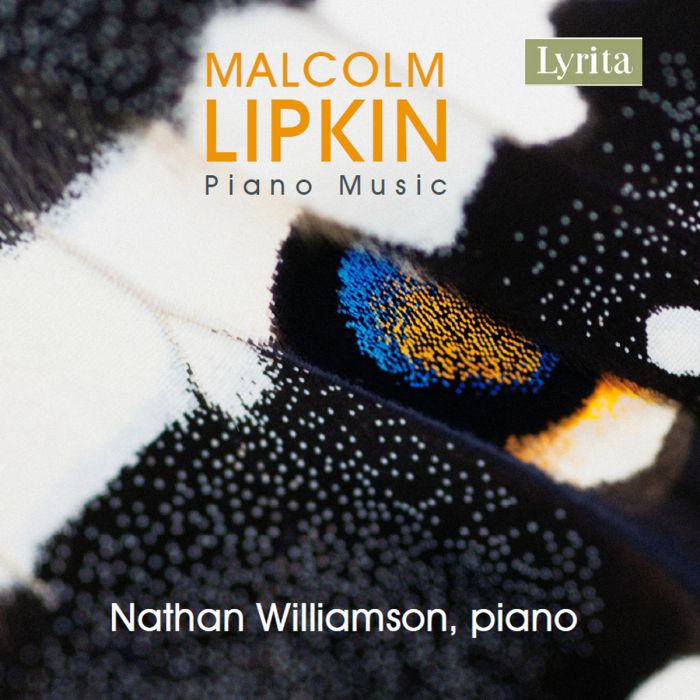
The introspective Nocturne No. 1 is slow and lugubrious, but full of colour. Nods to Beethoven’s Für Elise and Grieg’s Piano Concerto are explained by the dedication of the piece: “To Philip Fowke in honour of Eileen Joyce.” Joyce, the distinguished Australian pianist, had these two works firmly in her repertoire. Equally doleful is Nocturne No.2, which the notes correctly label as “dreamlike”. Nocturne No. 3 has its meditative mood blown away by a very brief, fiery outburst. The same happens in No. 4, where the “insistent, rapidly repeated notes introduce an element of assertiveness” typically absent in this piece. Nocturne No. 5 …interrupted melody was dedicated to Stephen Hough. It balances straightforward pianism with “ornaments and flourishes”. The structural basis of Nocturne No. 6 …glint and shadows seems to be pearls on a string – lots of contrasting figures and phrases, somehow managing to cohere, Nocturne No. 7 has the strange title …dancing figures. Marked Capriccioso, it barely stops being yet another meditation. The sequence is rounded off by Nocturne No. 8 …recollections. I guess that this may include references to the previous numbers. Nathan Williamson plays them all with skill and concentration. Yet, at a first hearing, and without a score, there is a feeling of sameness about these Nocturnes… Paul Conway’s liner notes give a detailed assessment of all the music on this disc. There is also a helpful overview of Malcolm Lipkin’s life and music, and a resume of the pianist Nathan Williamson. Rob Barnett has noted that the sleeve design (of a butterfly wing) looks back to the heady early days of Lyrita recordings, when Keith Hensby designed the covers. This well-balanced recital gives the listener a splendid introduction to Malcolm Lipkin’s piano music. As far as I can tell, these are all premiere recordings, so there is nothing to compare them to. - John France, MusicWeb international

|
| Sample Tracks |
|---|
|
Sonata No. 5: II. Quite Fast
Nocturne, No. 8… recollections
|
0.135 kg