We use cookies to make your experience better. To comply with the new e-Privacy directive, we need to ask for your consent to set the cookies. Learn more.



Musgrave: The Voices of Our Ancestors
£14.99
In stock
Catalogue Number
SRCD387
One of Musgrave’s most powerfully expressive and lavishly intricate vocal works, Rorate Coeli (1973) is scored for unaccompanied SATB choir. There are also five soloists (SSATB), who sing both as a quintet and as individuals. This dramatic and virtuosic piece shows an inventive approach to text-setting in its use of quasi-improvised musical effects.
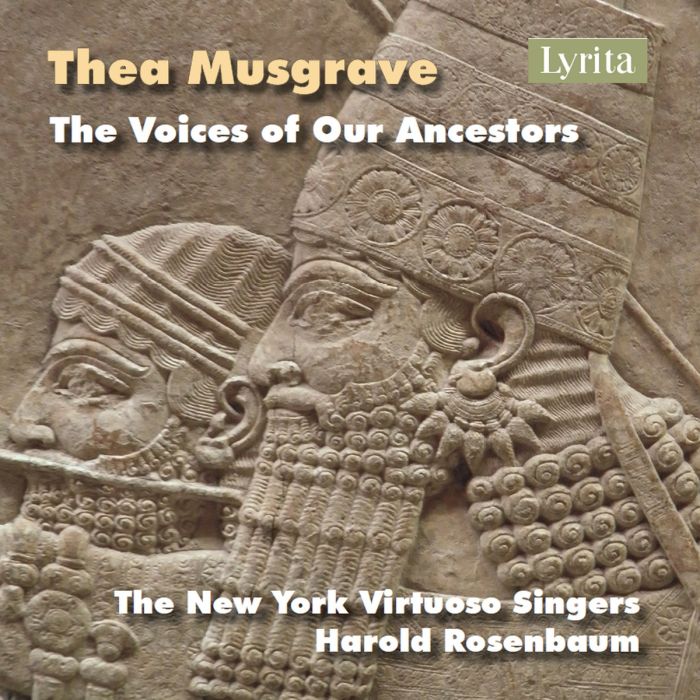
The Voices of our Ancestors (2014) is scored for brass quintet (horn, two trumpets, trombone and tuba), organ and SATB choir. Substantial and ambitious, The Voices of our Ancestors draws upon ancient texts from a number of linguistic sources, including Arabic, Persian, Hebrew, Latin, Greek, Egyptian and Chinese, all translated into English.
Commissioned by Wells Cathedral, Missa Brevis, for SATB choir and organ (2017) was first performed by Wells Cathedral Choir, on the Feast of John the Baptist, Sunday 24 June 2018, in the presence of the composer. This compact setting of the Ordinary of the Mass has a reassuring, positive character with several of the sections concluding brightly on major chords. [Paul Conway]
Manufacturer: Wyastone Estate Limited, Wyastone Leys, Monmouth, NP25 3SR
Email: sales@wyastone.co.uk
Reviews:
EDITORIAL REVIEWS
There is then a sense of theatricality about The Voices of Our Ancestors with the conductor being the first on stage and then, gradually the choir and then the brass group instigated by the trumpets, perhaps the beginning of creation is represented here as this piece concerns the existence of God and Mankind’s place or relevance in the world. The twelve chosen ancient texts are from, for example, Rome, Greece and Egypt and have been fascinatingly compiled beginning with the ‘Creation Hymn’ from the ‘Rig Veda’ which, curiously is spoken over not more than a pedal point -“Darkness there was; at first concealed in darkness”. We work through a poem from the Sanskrit, then a Hebrew text, a Persian and an Arabic poem, Virgil’s version of Dido’s Lament and finally ‘The Song of the Harper’ from ancient Egypt exhorting us to ‘Enjoy thyself more than thou hast ever done before”. The translations being from the 17th up to the early 20th Centuries. These poems are set for an SATB, chorus and four soloists as well as the brass. The texts are clearly given in the excellent booklet. This also contains the usual high standard and informative essay by Paul Conway.
MusicWebInternational
…Luckily, we have as counterweight the exultant, dramatic Rorate Coeli from 1973, packed with illustrative details and layered textures sparked into life by the vigorous words of the 14th/15thcentury Scottish poet William Dunbar. This is by far the best showcase for Harold Rosenbaum's bold and fearless New York Virtuoso Singers, singing lustily and unaccompanied, but elsewhere too often locked in a cage.
BBC MUSIC MAGAZINE

|
| Sample Tracks |
|---|
|
Rorate Coeli
Missa Brevis: II. Gloria
The Voices of Our Ancestors: III. The Royal Crown - IV. From the Zoroaster - V. Inscription on the City of Brass
|
0.135 kg