We use cookies to make your experience better. To comply with the new e-Privacy directive, we need to ask for your consent to set the cookies. Learn more.


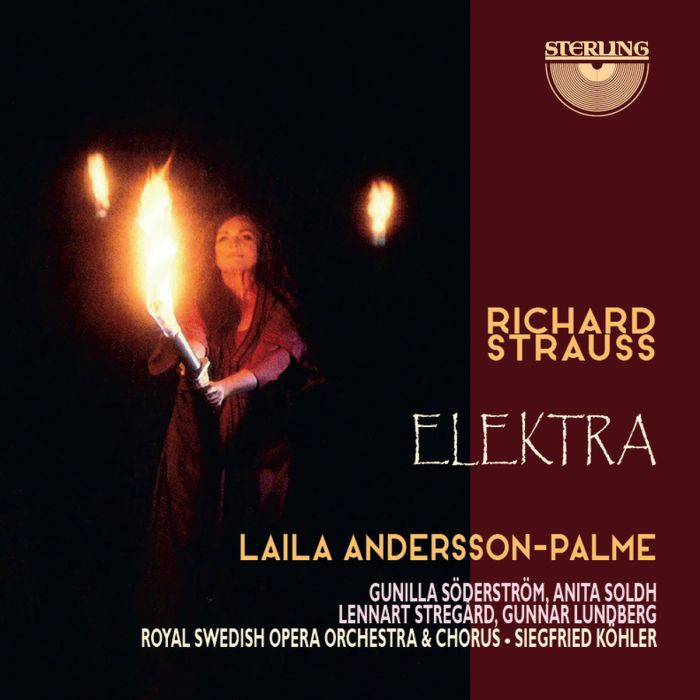
Richard Strauss: Elektra - Tragedy in One Act
£19.99
In stock
Catalogue Number
CDA1867
Based on ancient Greek mythology and Sophocles' tragedy Electra, the opera is the second of Strauss’s two highly modernist operas, the first being Salome.
Manufacturer: Wyastone Estate Limited, Wyastone Leys, Monmouth, NP25 3SR
Email: sales@wyastone.co.uk
Reviews:
“I was intrigued that this “stage recording” is analogue in origin, but is still very clear and vivid – so much so that on the first playing while wearing headphones with the volume on high, I nearly had a crise cardiaque when it started with a piercing shriek from Elektra…This was celebrated Swedish hochdramatische Sopran Laila Andersson-Palme’s farewell to the stage at 55 years old… Her voice is still in good condition… she sings powerfully and in a manner which constantly suggests her total derangement. She is especially touching in the extended lyrical passage after Orest has revealed himself to her, singing with great tenderness, floating and making a beautiful crescendo on the top B-flat on “erhabenes Gesicht” (noble face) – and her singing there is complemented by sublime orchestral playing…
Gunilla Söderström is a persuasive Klytämnestra; it is a gift of a role for a strong, low mezzo with good dramatic instincts…
Gunnar Lundberg is a strong, saturnine Orest – one of the best I have heard, with all the requisite qualities: enigmatic, noble and menacing. The Recognition Scene is searingly dramatic, culminating in that wonderful line, “Die Hunde auf dem Hof erkennen mich, und meine Schwester nicht!” (The dogs in the courtyard recognise me, yet my sister does not), eliciting Elektra’s exultant cry of “Orest!”…
The orchestral playing is first-rate, as is the conducting – never rushed but invariably tense and propulsive. The scene in which Orest enters the house and kills his mother is riveting; is there a more chilling yet diverting line in opera than Elektra’s “Ich habe ihm das Beil nicht geben können!” (I couldn’t give him the axe!)?... The provision of a libretto with an English translation is an unexpected bonus…this conveys all the thrill of live theatre which sometimes eludes studio recordings…it is a treasurable document commemorating a fine career in a first-class performance…”Ralph Moore
"Elektra, one-act opera, was the first of the famous collaborations between Richard Strauss and the Austrian librettist Hugo von Hofmannsthal, one of the founders of the Salzburg Festival. Unlike Sophocles' original Greek tragedy —in which Electra's brother, Orestes, is the figure destined to avenge his father's death—in Strauss's operatic version it is Electra who seeks revenge, seducing Aegisthus to enter the palace (in the "celebration"), where he and Clytemnestra —tormented by anxiety and a paralyzing fear— will tragically await their fate. This stage recording, released by the Swedish label Sterling, served as a farewell performance by the famous Swedish soprano Laila Andersson-Palme at the Royal Opera in Stockholm. So let's talk about an analog recording. We note that the orchestra is perhaps the largest ever used in the entire history of opera… It is also extraordinary the final duet between Andersson-Palme and Soldh. On the other hand, baritone Gunnar Lundberg sings his part of Orestes with determination and forcefulness. Master Siegfried Köhler, who conducted the Grand Orchestra of the Royal Swedish Opera, had the necessary qualities to transmit feelings and emotions to the viewer. A final annotation that may be of interest to the reader is that some passages are missing in this version. Even so, we consider it a recording that treasures the dissonant tonal modernism of the composer, classical Greek literature and the great artists who marked an entire operatic era in Sweden."
Josep Bosch, sonogram magazine

|
| Sample Tracks |
|---|
|
Elektra: II. Allein! Weh, ganz allein
Elektra: XX. Orest!
Elektra: XXVII. Ob ich nicht höre?
|
0.26 kg