We use cookies to make your experience better. To comply with the new e-Privacy directive, we need to ask for your consent to set the cookies. Learn more.


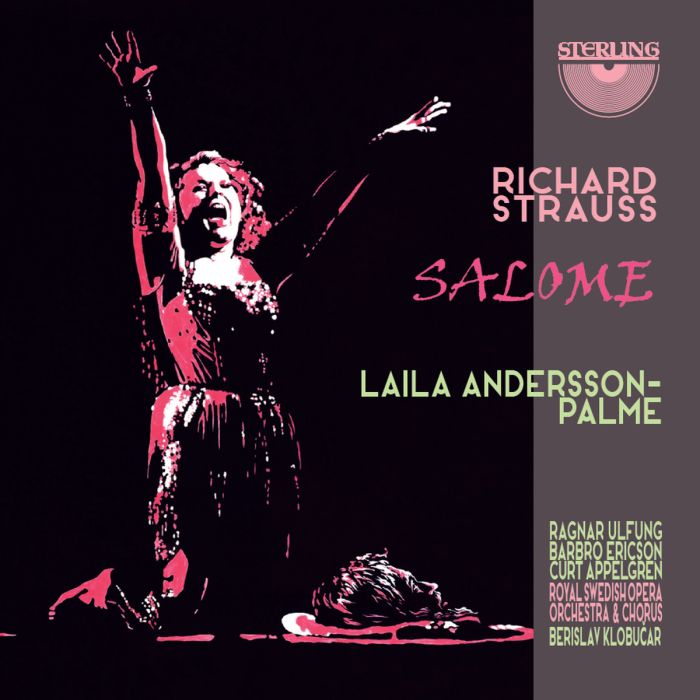
Richard Strauss: Salome, Opera in One Act
£19.99
In stock
Catalogue Number
CDA1843
Richard Strauss’ Salome, adapted from the play by Oscar Wilde, first premiered on December 9th, 1905. The opera shocked audiences due to its themes which blend the violent and erotic within a Christian biblical setting. It centres around the death of John the Baptist and is famous for its ‘Dance of the Seven Veils’.
Manufacturer: Wyastone Estate Limited, Wyastone Leys, Monmouth, NP25 3SR
Email: sales@wyastone.co.uk
Reviews:
EDITORIAL REVIEWS
The live recording is good with a realistic balance between the stage and the pit. The sound picture varies a bit, probably because of stage movements. Herodes sometimes seems very distant and occasionally voices are drowned by the orchestra, which is a recurrent problem with this opera, where Strauss’s revelry in sound eruptions can be unsurmountable for the singers when the conductor blazed away. Fortunately Berislav Klobučar is a very sensitive conductor, who always is considerate towards his singers – something Laila Andersson also points out in the interview. The whole performance is ideally paced and full of nuances and Klobučar never holds back when he has the field to himself, which means that it is a really dynamic performance. And he draws excellent playing from the Royal Orchestra, who obviously love playing under him. There is glowing string playing in the dance and impressive brass. What can be an obstacle to complete enjoyment for some listeners is the stage noise which can be very intrusive – more so in a sound recording than in the theatre or a DVD recording when you see what causes it. But this performance is so engaging that it is easy to be indulgent.
The singing is also first class. In the many secondary roles there are many great singers from the permanent ensemble of the Royal Opera of that time, some of them still active. The dominating character is of course Salome, a tremendously demanding part that requires both lyrical and highly dramatic expertise. Laila Andersson, with about 70 performances behind her at the time of recording, fulfils these requirements with knobs. Her tone is wonderfully youthful, almost girlish at times and few singers in my experience has sung the role so lyrically, with such expressive pianissimos. Considering that she was in her late 40s and had a career of more than 25 years behind her, this is truly amazing. At the same time she has the required steel in the voice for the long final scene, and still with such beauty of tone. With the silver shield carrying the head of Jochanaan in her hands she sings her monologue beginning Du wolltest mich nicht deinen Mund küssen lassen with masterly identification. Incidentally there is a timing error for this scene in the booklet, which says 3:45, but in reality it is 11:17. The set is worth owning for these 11:17 alone, but the role as an entity is just as masterly.
Göran Forsling, MWI
…The sound engineering places the music in a very natural opera house perspective that is front row center. The voices are all set within the same natural sounding acoustic as the orchestra. This means there is no unnatural spotlight miking of the singers which usually results them being too close, in a separate acoustic from the rest of the musicians; a common failing of many studio-based recordings.
Laila Anderson-Palme begins her Salome with a girlish, light silvery sound that is in keeping with the character. As her voice grows into the scene with Jokanaan, where she obsessively praises the various beauties she discovers in him, her assumption continues to grow in stature although occasionally a slight hectoring sound creeps into the top of her range. By the time she reaches the long final scene she is sailing at top form. She sings much of it in a very inward way as if she is singing to herself withinin her own world. Staruss'wide leaps between registers are attacked with excellence and throughout the scene she is thoroughly riveting. The wonderful Swedish singer Curt Appelgren sings Jokanaan. Here his voice remains warm and ingratiating in a sort of genial Papageno-like way. I find him lovely sounding… Ragnar Ulfung is a vivid Herod who occasionally has to lunge around for his notes but in a live performance that can be quite effective so this is not really a valid criticism. Barbro Ericson really hits the jackpot as Herodias. She is outsized and over-the-top in all the right ways. Her voice was still in splendid condition when this recording was made so I definitely prefer her over Astrid Varnay who was in tattered voice in Karl Böhm's film version of Salome on DVD.
Berislav Klobučar conducts a luminous and burnished reading, reveling in the oriental luxuriousness of Strauss' score. His rendition of The Dance of the Seven Veils can stand alongside Kempe's as one of the most gorgeous versions out there... His Strauss readings in particular were achieved with great beauty and glowing sound wherever he was performing… The Stockholm opera orchestra obviously enjoys working under him and they play spiritedly although there are the inevitable glitches here and there in a live performance, particularly some ragged playing from the brass section during the final 20 minutes.
The CD has been well produced by Sterling and contains two booklets. One with the German libretto German with an English translation. The other booklet contains a long article about Wilde's Salome and a very in-depth interview with Ms Anderson-Palme in which she shares many amusing anecdotes regarding the various productions of Salome that she was involved in during her career. There is an especially interesting anecdote regarding the production of Salome in Montreal that I saw her in which brought it all back to me so many years later.
Music Web International – Classical Review

|
| Sample Tracks |
|---|
|
Salome, Scene II: IV. Du wirst das für mich tun
Salome, Scene III: IV. Jochanaan!
Salome, Scene IV: I. Wo ist Salome?
Salome, Scene IV: X. Salome, ich beschwöre dich:
Salome, Scene IV: XV. Ah! Ich habe deinen Mund geküßt, Jochanaan
|
0.235 kg