We use cookies to make your experience better. To comply with the new e-Privacy directive, we need to ask for your consent to set the cookies. Learn more.



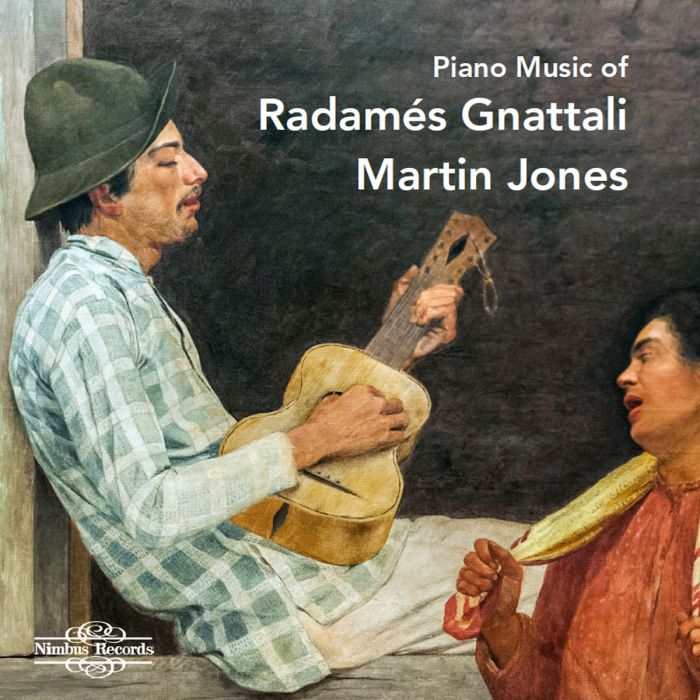
The Piano Music of Radamés Gnattali
£14.99
In stock
Catalogue Number
NI8114

Radamés Gnattali (b. Porto Alegre, 27 January 1906; d. Rio de Janeiro, 3 February 1988). Brazilian composer, pianist and conductor. Although classically trained his working life was dominated by popular music. His influence on the arrangements and orchestrations of Brazilian popular music was powerfully felt through his weekly broadcasts on Rádio Nacional which began in 1938, and continued into the mid 1950s. His own compositions are a conscious fusion of classical and popular idioms. Even though Gnattali’s association with popular music undoubtedly prejudiced his reception as a classical composer he was never critical or dissatisfied with Brazilian music. Even towards the end of his life he could say ‘I have never been frustrated with making popular music. I do it gladly and enjoy it very much … If I had gone to Europe, I might have been a great pianist – because I had the qualities for it – but I would never be a Brazilian composer’. This programme is primarily drawn from Gnattali’s earliest works. In this period he is either writing melodies in a popular style, or using folk melodies directly, and the characteristic shape of Brazilian song is never absent for long. Adrian Farmer
Manufacturer: Wyastone Estate Limited, Wyastone Leys, Monmouth, NP25 3SR
Email: sales@wyastone.co.uk
Reviews:
"The Brazilian of Italian descent had already entered the Porto Alegre Conservatory at the age of 14 and seemed to be heading for a great career as a classical pianist. Instead, however, he advanced to become one of the leading arrangers of popular Brazilian music. In the silent film era, Radamés Gnattali led a cinema orchestra, later he worked for radio, television and film. He also created serious works almost only on the side: he is said to have written almost 30 soloist concertos, including no less than twelve piano concertos.
Of course, he never stopped composing solo pieces for his instrument, the piano. Many of them are based on popular dance forms (chôro and waltz), in which witty jazz rhythms are also mixed. Whether romantically tinted or harmonically freer: they all demand a stupendous playing technique. From about 1945 onwards, Gnattali's piano music became more objective and sparse, but also more personal and unwieldy. The waltz cycle Valsas para piano is a good example of this – there are ten miniatures of about one minute between fragile and motoric. The Exercicios para piano (1965) date from a later period – one would like to hear more in the style of these modernist etudes. Preferably played again by Martin Jones, the Myra Hess Prize winner (1968) and specialist in rarely heard piano music." Hans-Juergen Schaal, Fidelity Online

|
| Sample Tracks |
|---|
|
Preludio amolecado
Toccata
Ponteio, Roda e Baile: Ponteio. Motivos "Na mata de São Miguel"
Canhoto
Vaidoso No. 2
Rapsodia Brasileira: O meu boi morreu
|
0.135 kg